
How to get better at crosswords
Try today’s 7×7, then use these eight tips and a four-week practice plan to solve small crosswords faster.
The timer counts up from Start until you solve the grid, including breaks.

Eight mini crossword tips
Try these habits on a short puzzle first, then use them on bigger grids.
1. Skim before you type
Read through the Across clues once without stopping. Some answers will come to you right away. Fill those in first and let them pull in the rest.
2. Start with the gaps
Fill-in-the-blank clues, written with “___”, are usually the quickest wins. A familiar phrase is easier to finish than a definition is to recall.
3. Short entries first
Three- and four-letter entries have fewer possibilities. Each one you place gives you letters in the longer entries that cross it.
4. Switch direction often
Every open square in a mini grid sits in both an Across entry and a Down entry. When an Across clue stalls, try the Down clues that cross it. In ClueSprint, tap the selected square again to switch between Across and Down.
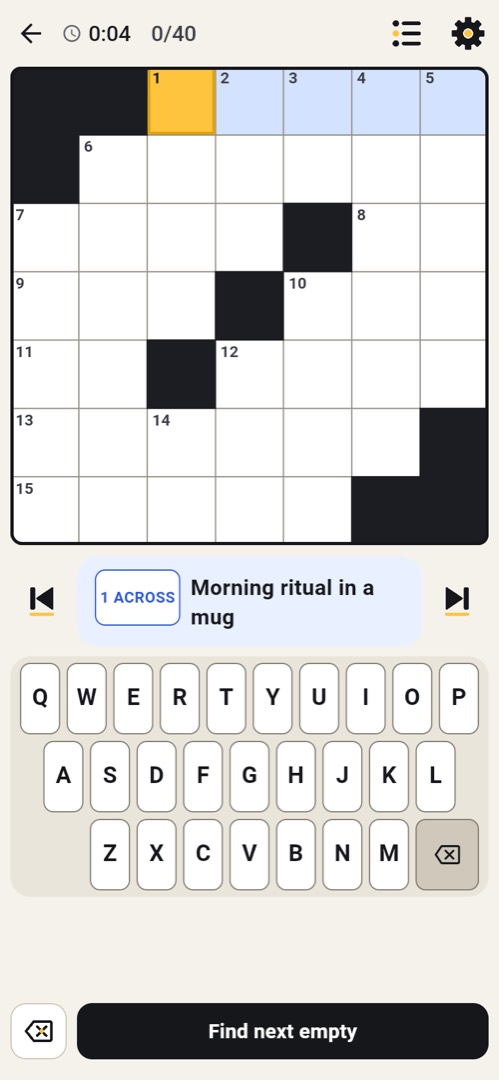
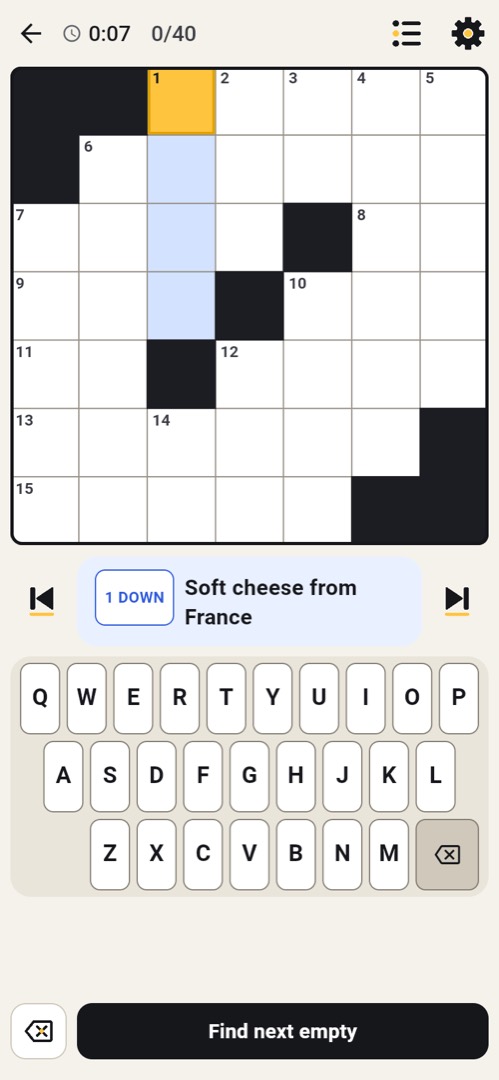
5. Count the squares
The length of an entry rules out most guesses. If a word you have in mind is one letter too long, look for a shorter form or a different tense.
6. Match the clue’s form
Plural clue, plural answer. Past tense clue, past tense answer. An “abbr.” or a question mark changes what you are looking for. The clue conventions guide explains each signal.
7. Hold guesses loosely
If crossing letters stop making sense, one of your answers is probably off. Clear the entry and try again. In ClueSprint nothing is marked wrong while you solve, so a guess costs you nothing until you submit.
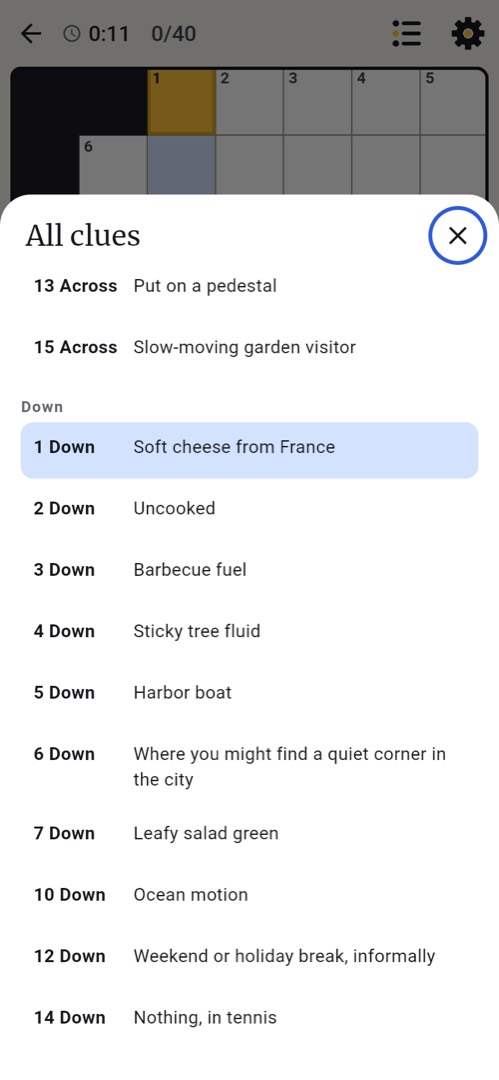
8. Look at every clue at once
When you are stuck, open the full clue list. Seeing Across and Down side by side often shows a crossing you missed. A hint is there if you need it: when Reveal letter is offered, it fills one square, and your result shows how many hints you used.
A four-week practice plan
- Week 1: minis only. Solve one 5×5 a day, such as the free sample minis, and read every explained answer afterwards, even the ones you got.
- Week 2: move up to 7×7. Play the Daily each day. For an extra 7×7, look for a Play link in the mini crossword archive. Notice which clues you fill first and which ones you leave until the end.
- Week 3: set a personal target. Use your last few solve times as a starting point. If one clue holds you up, move on and come back with more crossing letters.
- Week 4: mix it up. Try a larger grid on some days and go back to minis on others. By now the common short answers should feel familiar.
Should you look things up?
Yes, when it helps you learn. A word you look up today is one you will know next week. If you know some letters but not the word, the crossword solver shows every word that fits; reading the list is a quick lesson in common patterns. Just decide for yourself when a lookup still counts as your own solve.
Common questions
How long does it take to get better at crosswords?
Most people notice a difference within a few weeks of solving a small puzzle every day. The same short answers keep coming back, and once you know them the rest of the grid opens up.
Are mini crosswords easier than regular ones?
Usually, yes. A 5×5 or 7×7 grid has fewer clues and shorter answers, and the clues tend to use everyday words. That makes minis a good way to build the habits that larger grids need.
How do I get faster at crosswords?
Skim the clues first, fill the easy answers right away, and switch direction the moment a crossing gives you a letter. Then keep a steady daily habit: speed comes from recognising answers, not from typing faster.
Want the basics first? See how to solve a crossword, types of crossword clues and crossword terms.